
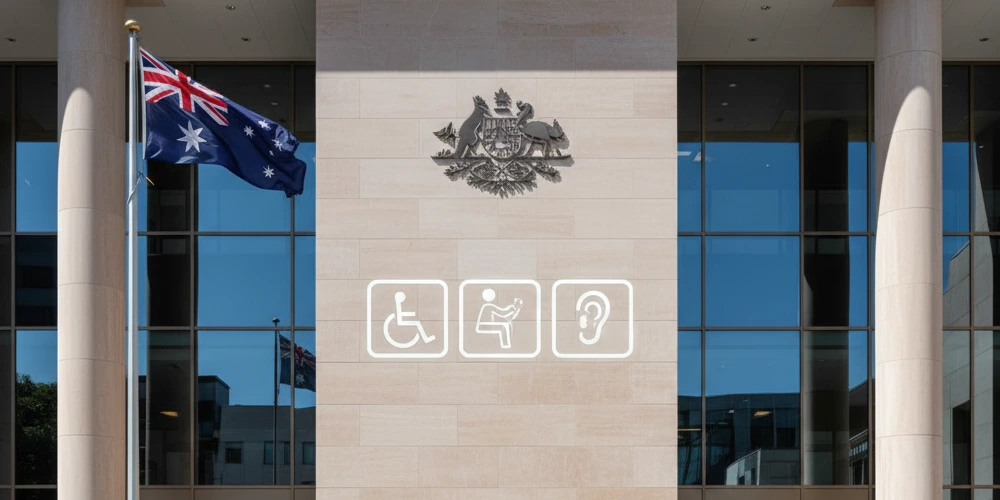
As a deaf or hard of hearing Australian, you have legal rights to equal access and opportunity in employment, education, services, and public life. These rights are enshrined in the Disability Discrimination Act 1992 (DDA), a landmark piece of federal legislation designed to eliminate discrimination against people with disabilities. Understanding your rights under this Act empowers you to advocate for yourself, recognise when discrimination occurs, and take action when necessary.
This comprehensive guide explains the Disability Discrimination Act, how it protects deaf Australians, what your rights are in different contexts, and what to do if you experience discrimination.
What Is the Disability Discrimination Act?
The Disability Discrimination Act 1992 (DDA) is federal legislation that makes it unlawful to discriminate against a person because of their disability in many areas of public life. The Act is administered by the Australian Human Rights Commission (AHRC).
Who Is Protected?
The DDA has a broad definition of disability that includes:
- Temporary and permanent disabilities
- Physical, intellectual, sensory, neurological, learning, and psychosocial disabilities
- Diseases or illnesses
- Disabilities people have had in the past
- Future disabilities
- Disabilities people are assumed to have
Importantly for the deaf community, the DDA covers:
- Deafness and hearing loss (all degrees)
- Use of Auslan (Australian Sign Language)
- Use of hearing aids, cochlear implants, or other assistive devices
- Being accompanied by an interpreter or assistance animal
This means discrimination based on any aspect of your hearing status or the accommodations you use is unlawful.
What Areas Does the DDA Cover?
The Act makes discrimination unlawful in:
- Employment: Job applications, recruitment, terms of employment, promotions, training, dismissal
- Education: Schools, universities, TAFE, vocational education, courses
- Access to premises: Buildings open to the public, government offices, shops, restaurants
- Provision of goods and services: Banking, healthcare, legal services, entertainment, retail
- Accommodation: Renting or buying houses and units
- Clubs and associations: Membership and participation
- Administration of Commonwealth laws and programs: Government services and programs
- Sport: Participation and access to sporting activities
What Constitutes Discrimination?
Understanding what discrimination looks like helps you recognise when it occurs.
Direct Discrimination
Direct discrimination occurs when you’re treated less favourably than someone without a disability in similar circumstances because of your disability.
Examples:
- A restaurant refuses to serve you because you’re deaf
- An employer rejects your job application solely because you need an Auslan interpreter for meetings
- A landlord refuses to rent to you when they learn you’re deaf
- A university denies your enrolment because they claim they “can’t accommodate deaf students”
Indirect Discrimination
Indirect discrimination is subtler. It occurs when a rule, policy, or practice applies to everyone but has an unfair effect on people with disabilities.
Examples:
- A workplace policy requires all staff meetings to be conducted via phone calls only, excluding deaf employees who can’t hear
- An online training course has no captions, preventing deaf students from accessing the content
- A building’s emergency evacuation procedures rely solely on audio alarms with no visual alerts
Indirect discrimination is unlawful if:
- The requirement or condition applies to everyone
- It disadvantages people with your disability
- It’s not reasonable in the circumstances
Harassment
Harassment because of disability is also unlawful under the DDA. This includes:
- Offensive jokes about deafness or sign language
- Unwanted remarks about your hearing aids or cochlear implant
- Mimicking sign language in a mocking way
- Creating a hostile environment based on your disability
Your Rights in Specific Contexts
Let’s explore what the DDA means for deaf Australians in different areas of life.
Employment Rights
Employers must not discriminate at any stage of employment.
During Hiring:
You have the right to:
- Apply for jobs on equal terms with hearing applicants
- Not be asked discriminatory questions about your disability (though you can be asked if you can perform the inherent requirements of the job with reasonable adjustments)
- Request reasonable workplace adjustments during interviews (like providing questions in writing or using an interpreter)
Workplace Adjustments:
Employers must make “reasonable adjustments” to enable you to work effectively. For deaf employees, this might include:
- Providing Auslan interpreters for meetings, training, and important communications
- Installing visual alert systems (fire alarms, phone lights)
- Using written communication or email instead of verbal-only instructions
- Providing captioned training videos
- Adjusting open-plan office layouts to reduce lip-reading difficulties
- Installing video calling technology for sign language communication
- Offering assistive listening devices or hearing loops
What’s “Reasonable”?
Adjustments are generally considered reasonable unless they would cause “unjustifiable hardship” to the employer. This considers factors like:
- The cost of the adjustment
- The size and resources of the organisation
- The benefit to the employee and other employees
- The impact on the business’s operations
Cost alone usually isn’t sufficient to claim unjustifiable hardship, especially for larger organisations. Many adjustments cost very little (like sending meeting agendas in advance) or are funded through government programs.
What If You’re Discriminated Against?
If an employer refuses to hire you, promotes someone less qualified, or dismisses you because of your disability, you may have grounds for a complaint.
Education Rights
Students have the right to access education on equal terms with other students.
Schools:
Deaf students have the right to:
- Enrol in mainstream or specialist schools
- Access the same curriculum as hearing students
- Receive reasonable adjustments such as:
- Auslan interpreters in class
- Captioning for videos and audio materials
- Note-takers
- Preferential seating (front of class for lip-reading)
- Visual aids and written instructions
- FM systems or other assistive listening devices
- Access to specialist teachers of the deaf
Universities and TAFE:
Tertiary students have similar rights, including:
- Auslan interpreters for lectures, tutorials, and seminars
- Real-time captioning (CART services)
- Extended time for exams if impacted by communication needs
- Access to learning materials in accessible formats
- Captioned videos and audio resources
- Communication support during placements
Disability Standards for Education:
The Disability Standards for Education 2005 provide specific requirements for educational institutions. Schools and universities must make reasonable adjustments to ensure students with disabilities can:
- Access and participate in education on the same basis as other students
- Achieve learning outcomes comparable to those of other students
Access to Services
Service providers—from healthcare to banking, legal services to entertainment—must provide equal access.
Healthcare Services:
You have the right to:
- Request an Auslan interpreter for medical appointments (through the National Auslan Interpreter Booking and Payment Service, or directly with hospitals)
- Receive important health information in accessible formats
- Have medical procedures and diagnoses explained clearly
- Not be dismissed or treated differently by healthcare providers because you’re deaf
Legal Services:
You have the right to:
- Auslan interpreters in court proceedings
- Legal advice communicated in a way you can understand
- Access to legal documents in plain language
- Police communication through interpreters when needed
Financial Services:
Banks and financial institutions must:
- Provide accessible communication methods (video banking, written communication)
- Explain financial products and services clearly
- Offer Auslan interpreters for complex transactions or meetings
- Not discriminate in lending or insurance decisions based solely on deafness
Retail and Hospitality:
Shops, restaurants, cafes, and entertainment venues must:
- Serve deaf customers on the same basis as hearing customers
- Provide reasonable assistance (writing things down, using gestures)
- Not refuse service because you’re deaf or use sign language
- Include captions on videos or screens when feasible
Housing Rights
Discrimination in housing is unlawful.
Renting:
Landlords and real estate agents cannot:
- Refuse to rent to you because you’re deaf
- Charge higher rent or bond because of your disability
- Impose unreasonable conditions (like refusing to install visual doorbells or smoke alarms)
You have the right to:
- Request reasonable modifications to make the property accessible (though you may need to pay for non-permanent changes)
- Install visual alert systems for safety
- Have support workers or interpreters visit
Buying Property:
Sellers cannot refuse to sell property to you because you’re deaf. Mortgage providers cannot discriminate in lending decisions based solely on disability.
Access to Premises
Buildings and spaces open to the public must be accessible.
Disability Standards for Access to Premises:
These standards require that:
- New buildings meet accessibility requirements
- Existing buildings make reasonable modifications
- Public spaces include visual fire alarms and emergency information
- Theatres and event venues provide accessible seating and information
Common Access Issues for Deaf People:
- Lack of visual emergency alerts
- No induction loops or hearing assistance systems in public venues
- Poor lighting that makes lip-reading difficult
- Announcements without visual display boards
- Glass partitions without clear communication alternatives
When Discrimination Might Be Lawful
The DDA includes some exemptions where discrimination may be lawful.
Inherent Requirements:
If a job’s inherent requirements genuinely cannot be met even with reasonable adjustments, not hiring someone may be lawful. However, employers must seriously consider all possible adjustments first.
For example: A job requiring making hundreds of phone calls daily might have hearing as an inherent requirement—but even then, technology like captioned telephone services might make the job accessible.
Unjustifiable Hardship:
If making adjustments would cause unjustifiable hardship, discrimination might be lawful. However, this threshold is high, and cost alone usually isn’t enough.
Special Measures:
Programs designed specifically to support people with disabilities (like deaf-only support groups or specialist schools) are not discriminatory—they’re “special measures” to promote equality.
What to Do If You Experience Discrimination
Step 1: Document Everything
Keep detailed records of:
- Dates, times, and locations of discriminatory incidents
- Names of people involved
- Witnesses present
- What was said or done
- Any emails, letters, or written communication
- Photographs or recordings if relevant
- How the discrimination affected you
Step 2: Try to Resolve Informally
Sometimes discrimination results from ignorance rather than malice. Consider:
- Explaining your rights and needs calmly
- Suggesting reasonable adjustments
- Providing information about deafness and accessibility
- Requesting a meeting with management or decision-makers
Many issues can be resolved through education and dialogue.
Step 3: Make a Formal Complaint
If informal resolution doesn’t work, you can make a formal complaint.
To the Organisation:
Most organisations have internal complaint procedures. Follow these first, documenting each step.
To the Australian Human Rights Commission:
You can make a complaint to the Australian Human Rights Commission about discrimination under the DDA.
How to Complain:
- Visit the AHRC website
- Complete the complaint form (online or downloadable)
- Provide details of the discrimination
- Submit supporting evidence
What Happens Next:
- The AHRC assesses your complaint
- If accepted, they notify the other party
- Conciliation is attempted (both parties try to reach agreement)
- If conciliation fails, you may be able to take the matter to court
Important Notes:
- Complaints should be made within 12 months of the discrimination occurring (though exceptions exist)
- The process is free
- You can have a support person or representative help you
- The AHRC cannot award compensation—only courts can do that if conciliation fails
Step 4: Legal Action
If conciliation fails, you can take the matter to Federal Court or Federal Circuit Court. Consider:
- Seeking legal advice (legal aid may be available)
- Understanding costs and time commitments
- Gathering strong evidence
- Considering whether the outcome justifies the process
Getting Support and Advocacy
You don’t have to navigate discrimination alone.
Deaf Organisations:
State-based deaf organisations provide advocacy and support:
- Deaf Services Queensland
- Deaf Victoria
- Deaf Can:Do (South Australia)
- Deaf Western Australia
- Each organisation offers information, advocacy, and sometimes legal support
Legal Services:
- Community legal centres often provide free advice
- Legal Aid may fund representation for discrimination cases
- Disability discrimination specialists can advise on your case
Australian Federation of Disability Organisations (AFDO):
AFDO represents people with disabilities and can provide information about rights and advocacy.
Your Union:
If discrimination occurs at work, your union may provide support and representation.
Prevention: Knowing Your Rights Helps Everyone
Understanding your rights doesn’t just help when discrimination occurs—it helps prevent it.
Self-Advocacy:
- Clearly communicate your needs and rights
- Suggest practical solutions to access barriers
- Educate others about deafness and reasonable adjustments
- Be confident in requesting accommodations
Education:
When people understand that accommodating deaf people is:
- A legal requirement
- Usually simple and inexpensive
- Beneficial to everyone
They’re more likely to provide access willingly.
The Ongoing Journey Toward Equality
Despite the DDA’s protections, deaf Australians still face barriers:
- Many service providers don’t understand their obligations
- Enforcement can be slow and difficult
- Awareness of deaf needs remains low in many sectors
- Funding for interpreters and services is often inadequate
Advocacy continues for:
- Stronger DDA enforcement
- Better funding for Auslan interpreters
- Recognition of Auslan as an official language
- Improved accessibility standards
- Greater deaf representation in policy-making
Every time a deaf Australian asserts their rights, it helps build a more accessible and equitable society for everyone.
Additional Resources
Australian Human Rights Commission: https://humanrights.gov.au/our-work/disability-rights/disability-discrimination
Information about the DDA, how to make complaints, and your rights.
Disability Discrimination Act 1992: https://www.legislation.gov.au/Details/C2018C00125
The full text of the legislation (technical but comprehensive).
State Deaf Organisations:
Contact your state’s deaf organisation for local advocacy and support.
Legal Help:
- National Legal Aid: Find your state’s legal aid service for potential support
- Community Legal Centres: Free legal advice and information
- JobAccess: Information about workplace rights and accommodations (1800 464 800)
Conclusion: Your Rights Matter
The Disability Discrimination Act provides strong legal protections for deaf Australians. You have the right to equal access, reasonable adjustments, and participation in all areas of life. Discrimination based on deafness, sign language use, or need for accommodations is unlawful.
Knowing your rights empowers you to:
- Recognise discrimination when it occurs
- Advocate for appropriate accommodations
- Take action when your rights are violated
- Contribute to a more accessible Australia
Don’t hesitate to assert your rights. You’re not asking for special treatment—you’re requesting the equal access that the law guarantees. The Disability Discrimination Act exists precisely to ensure that being deaf doesn’t prevent you from participating fully in Australian society.
Your rights are real, they’re protected by law, and they matter. Stand up for them, not just for yourself, but for the entire Australian deaf community. Every successful assertion of rights makes the path easier for those who follow.
If you experience discrimination, you don’t have to accept it. Seek support, document what happened, and take action. The law is on your side.